
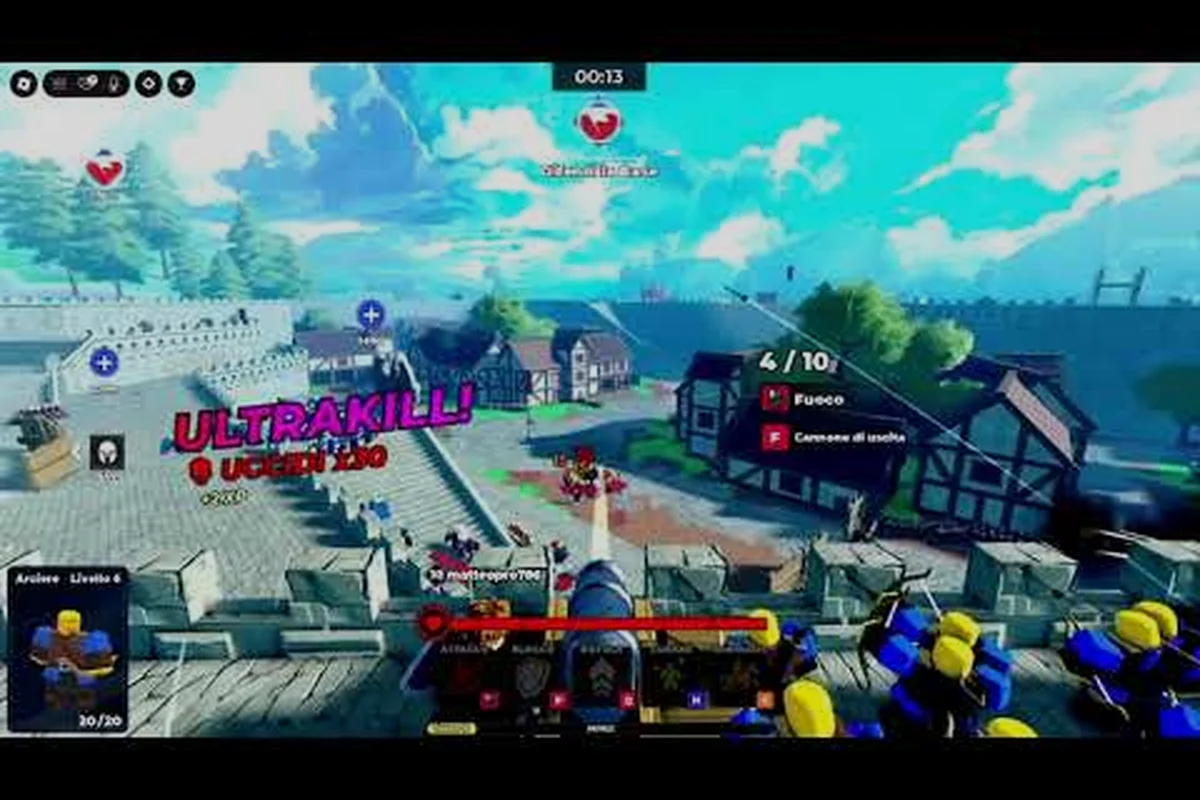
PvP in Command An Army punishes hesitation. Troops spawn behind you, the enemy line closes in fast, and a single mistimed order can collapse your entire squad before you understand what went wrong. New commanders who skip the basics usually lose their first five matches by feeding troops into ranged fire one by one, which is why this Command An Army PvP guide starts with the systems that decide every firefight: classes, Star Limits, formation orders, and counter-attack timing. Think of it as a Command An Army 101 guide built specifically for the live battle mode, not the practice range.
Before reading further, it helps to lock in a few universal rules. First, every troop you recruit is permanent until killed, so reckless play costs real power. Second, the capture-point game loop rewards map control, not raw kills. Third, your formation calls (Follow, Hold, Attack, Rush) behave differently against every class, which is why memorizing a Command An Army step by step rotation matters more than memorizing individual unit stats. The official Command An Army Roblox page confirms that team-vs-team warfare, point capture, and formation management are the three pillars of the experience, and the rest of this guide turns those pillars into a repeatable PvP playbook.
Classes, Star Limits, and What Actually Wins Fights
Every PvP match in Command An Army starts with the same question: which class should I recruit, and how strong should each one be? The class system defines role, while the Star Limit system caps how powerful any individual unit can grow. According to the All Things How breakdown of Star Limits and Classes, Star Limits gate how much power a single troop can stack, which means stacking weak units and elite units require opposite strategies. Getting this balance wrong is the single biggest reason new commanders lose early PvP matches.
The Four Core Classes and Their PvP Role
| Class | Primary Role | Best PvP Use | Weakness in PvP |
|---|---|---|---|
| Melee | Frontline brawler | Holding capture points, soaking damage | Vulnerable to Ranged focus fire |
| Ranged | Backline damage | Breaking enemy formations from distance | Fragile if caught by Cavalry charge |
| Cavalry | Mobile flanker | Diving exposed Ranged rows, capturing open points | Falls off if the enemy stacks Melee |
| Special | Utility / burst | Disrupting clumps, finishing low-HP targets | Long cooldown; wasted on single troops |
The table above is the PvP cheatsheet you should keep open during your first 10 matches. Each class has a clear job, and trying to build a "balanced" mixed squad almost always underperforms a focused composition that counters what the enemy is actually running. If you queue into a match and see the enemy stack two Ranged rows, switching to Cavalry flankers is the fastest way to flip the fight, because Cavalry deletes Ranged units caught in the open.
Spread Your Stars Across Mid-Tier Troops In PvP
Star Limits function as a soft cap on how much gear, level, or stat investment any single troop can carry. The community-recommended approach is to spread your Stars across multiple mid-tier troops rather than dumping everything into one "star" unit, because Star Limits make the marginal power of upgrading past the cap extremely small. A squad of three 3-Star troops usually beats one 5-Star troop in PvP simply because the enemy only needs to kill one body to swing the fight, while you can lose a body and still have two lanes of pressure.
If you want a deeper explanation of when to push individual troops versus when to build wide, the Command An Army skill guide covers how to think about power spikes. For the moment, the practical rule is simple: stop upgrading a troop once it hits your squad's average Star Level, and recruit the next body instead. That single habit wins more matches than any micro optimization.
Formation Orders: The Four Buttons That Decide Everything
Command An Army gives every commander exactly four formation orders, and according to the All Things How explanation, those orders are Follow, Hold, Attack, and Rush. Each order changes how your troops behave against the enemy, and misreading which order fits the current moment is the second most common reason new players lose. A Command An Army for dummies playbook therefore has to drill these four buttons until they feel automatic.
Order Behavior In A Live Fight
| Order | Troop Behavior | Best Moment to Call It | Common Mistake |
|---|---|---|---|
| Follow | Stays close to commander, repositions with you | Capturing points, regrouping after a lost fight | Calling Follow mid-engagement causes troops to walk away from kills |
| Hold | Stands ground, attacks anything that enters range | Defending a captured point, baiting enemy charges | Holding too long lets Ranged pick you apart for free |
| Attack | Pushes the nearest enemy troop or structure | Starting a fight, breaking a stalemate | Attacking into a counter-composition loses the trade |
| Rush | Ignores safety, sprints straight at the enemy | Sealing a won fight, punishing a split enemy line | Rushing into an unready squad gets your whole team deleted |
A good PvP habit is to call Hold the moment you capture a point, because point control is worth more than chasing kills. New commanders who constantly press Attack or Rush tend to win trades and lose the objective, which is why so many matches end with the losing team holding more kills than the winning team. The match scoreboard rewards objectives first and eliminations second, so your formation calls should reflect that priority.
Reading the Enemy Before You Press a Button
Every order is a prediction about what the enemy will do in the next five seconds. If you see the enemy commander waving their troops forward, calling Hold and letting them walk into your line is usually stronger than matching their push, because your troops fire first while theirs are still in travel. If you see the enemy line thinning because three troops are chasing a low-HP target, that is the moment to call Rush, since their formation is now split and your squad can collapse the larger half. Reading the minimap, listening for the capture-point tick sound, and tracking how many enemy troops are visible are the three signals that tell you which order to press.
Map Awareness, Capture Points, and PvP Rotation
The third pillar of any working Command An Army PvP guide is rotation, because the game mode is fundamentally a point-control mode with combat attached. A squad that wins every teamfight but ignores the capture timer will lose to a team that plays patient and trades space for time. Building the habit of glancing at the capture timer every few seconds is one of the highest-value skills a new player can develop.
How to Read Capture Point Pressure
Capture points tick in both directions, and the speed of the tick depends on how many friendly versus enemy troops are standing on the point. A point with three of your troops and one enemy troop will tick slowly in your favor, while a point with zero troops on either side stays neutral. That means sending one lonely troop to "hold" a point rarely works against a real opponent, because the enemy can simply walk two troops onto the point and reverse the tick.
The most effective rotation pattern for a new commander is a two-troop pair, because two troops can hold a point against one enemy troop, contest a point evenly against two, and retreat cleanly against three. If you want a more detailed look at early-game economy and how many troops you should keep in reserve, the Command An Army quick start guide covers the resource side of the same problem.
Common Rotation Mistakes and How to Fix Them
| Mistake | Why It Loses | Fix |
|---|---|---|
| Sending all troops to one point | Leaves other points open for free capture | Always keep at least one troop near each active point |
| Ignoring the minimap | Enemy flanks your backline without warning | Glance at the minimap every 5-10 seconds |
| Chasing kills deep into enemy territory | Your capture timer stalls, enemy snowboards the point | Cap first, chase second |
| Spawning troops far from the action | New troops arrive late and miss the teamfight | Spawn at the closest captured point |
Rotation is the area where a Command An Army step by step improvement plan pays off fastest, because each match you play trains your brain to think in timers instead of in eliminations. After a few matches, you will start predicting where the enemy will rotate before they actually move, and that prediction is what separates a mid-tier commander from a top-tier one.
Counter-Attack Timing: When to Punish and When to Wait
The fourth and most subtle pillar of PvP is counter-attack timing, which is the skill of waiting for the enemy's mistake before pressing your advantage. New commanders almost always over-pursue after winning a fight, which is why this section of the Command An Army 101 guide focuses on restraint. The best commanders lose fewer troops not because they play better mechanically, but because they wait half a second longer before committing.
Punishing a Committed Enemy Rush
When the enemy calls Rush and sends their squad charging into yours, your first instinct is usually to call Rush back, but the higher-value play is to call Hold, let their troops overextend past your line, and then call Attack once their formation is split. Punishing a committed Rush with a held position is the single most reliable counter in early PvP, because committed troops will not retreat when they take damage, which means you can free-hit them for at least two seconds before the enemy commander reacts.
A secondary punish window opens whenever the enemy commander uses a Special-class ability. Special abilities have visible cast animations and long cooldowns, so calling Rush the moment you see the animation start often deletes a clump of enemy troops before their commander can reposition. If you want a fuller breakdown of how Special units and abilities interact, the Command An Army how to win article covers the match-deciding plays in more depth.
When to Hold and Reset
Not every engagement is worth taking. If you are down two troops, the enemy holds a capture point, and your reinforcement timer is longer than theirs, the correct play is to call Follow, retreat, and reset the fight on your side of the map. Resetting trades short-term pride for long-term map control, which is what actually wins matches. The commanders who climb fastest in Command An Army are the ones who accept bad fights and look for the next good one, rather than forcing a doomed engagement because they feel pressured to "do something."
Holding for a reset is also the right call when you do not yet know the enemy composition. A 3-second pause to read the enemy line costs you almost nothing, and it gives you the information you need to call the correct formation order. Rushing in blind is a coin flip, while a patient counter-call is a calculated trade, and calculated trades win more matches over a long session.
Reading the Match: From First Engagement to Final Push
Once you have the four pillars in muscle memory, the next layer is reading the match as a whole, which is where most Command An Army for dummies players stall out. A typical PvP match runs in three phases: opening skirmish, mid-game rotation, and final push. Each phase rewards a different mindset, and treating them as a single continuous brawl is a common mistake that costs new commanders easy wins.
Phase 1: Opening Skirmish (0-60 Seconds)
The opening phase is about information, not kills. Your goal is to scout the enemy composition, secure one capture point, and avoid losing more than one troop. Calling Hold on the nearest point and watching how the enemy responds tells you whether they are aggressive or passive, which informs every decision you make for the rest of the match. Passive openings usually end with a mid-game stalemate, while aggressive openings often produce a snowball that decides the match by minute two.
Phase 2: Mid-Game Rotation (60-180 Seconds)
The mid-game is where the match is actually won or lost. Both teams now know each other's composition, capture points are contested, and the side that rotates better usually builds a small lead. The best habit is to keep one troop on each active point and reserve a pair of troops for a swing rotation, because a swing rotation can punish an overextended enemy and flip a point in a single push. If you want a deeper look at how rotations work in different game states, the Command An Army noob to pro article walks through the same concept from a higher-skill perspective.
Phase 3: Final Push (Last 60 Seconds)
The final phase is about closing the match. If you are ahead, slow the game down, call Hold on every point, and force the enemy to come into your line. If you are behind, take one decisive fight, call Rush, and accept that you will either flip the match or lose it in that single engagement. Splitting the difference by playing cautious while behind almost always loses, because the capture timer rewards the team that keeps the pressure on.
Building a Repeatable Command An Army Step by Step Routine
A PvP session feels chaotic, but the commanders who climb fastest run the same routine every match. The routine below is a compact Command An Army step by step template you can load into your first ten matches, after which you can adapt it to your own playstyle.
-
Spawn at the closest point to your team and call Follow to group up.
-
Recruit one troop from each class up to your squad cap, prioritizing Ranged and Cavalry for early PvP.
-
Move to the nearest contested point and call Hold once you touch it.
-
Watch the enemy line for 3 seconds, identify their composition, and call the order that counters it.
-
Rotate your reserve pair every time a point changes hands, never leaving a point empty.
-
Punish committed enemy pushes with Hold, then Attack once their formation breaks.
-
Reset by calling Follow whenever you are down troops and the timer is unfavorable.
-
Close the match in the final minute with either a defensive Hold (if ahead) or an all-in Rush (if behind).
Running this routine for ten matches is worth more than reading a hundred advanced guides, because it builds the muscle memory that advanced guides assume you already have. Once the routine feels natural, you can start experimenting with composition swaps, formation fakes, and aggression windows, but skip that step until the basics feel boring.
A PvP guide is only useful if it changes how you play your next match, and the next match is the one that matters. Lock in the class priorities, drill the four formation orders until they feel automatic, treat capture points like the scoreboard they actually are, and time your counter-attacks one beat later than your instinct wants to. Those four habits will carry you from your first loss to a stable win rate faster than any single trick, and they are the same habits top commanders run every match without thinking. Save this Command An Army PvP guide, queue up, and apply the routine on your next spawn.
Frequently Asked Questions
What is the best class to recruit first in Command An Army PvP?
Ranged and Cavalry are the two strongest first recruits in early PvP because Ranged wins neutral engagements from a safe distance and Cavalry punishes overextended enemies with a single flank. Melee is a strong third pick if you intend to hold capture points, while Special is best saved for when you already know the enemy composition.
How do Star Limits change how I should build my squad?
Star Limits cap how strong any single troop can become, so the optimal strategy is to spread your Stars across multiple mid-tier troops rather than stacking one elite unit. A squad of three evenly starred troops usually outperforms a squad built around one "star" carry, because losing one body to focused fire is less catastrophic when the rest of your squad is still strong.
When should I call Rush instead of Attack?
Call Rush only when the enemy line is split, the enemy commander just used a long-cooldown ability, or you need to seal a won fight before the enemy can reset. Calling Rush into a healthy enemy formation usually deletes your squad for free, while calling Attack into a clumped enemy line gives your troops a chance to reposition if the trade goes badly.
How do I stop losing capture points late in a match?
Stop chasing kills and start calling Hold on every point you already own, because the capture timer rewards defense more than aggression. If you are behind, take one decisive teamfight with Rush instead of bleeding points by playing passive, and accept that the final minute is a single commitment rather than a slow grind.